Thursday, 19 February 2015

Careers in Psychology


                              Psychologists are probably best known for their work in the health and education services, but psychology graduates can be found in almost any area of life.
             
  • Clinical Psychology
       

Clinical psychologists assess and treat people with psychological problems. They may act as therapists for people who are experiencing normal psychological crises (e.g., grief) or for individuals suffering from chronic psychiatric disorders. Some clinical psychologists are generalists who work with a wide variety of populations, while others work with specific groups such as children, the elderly, or those with specific disorders
  • Counselling Psychology

Counselling psychologists do many of the same things that clinical psychologists do. However, counselling psychologists tend to focus more on persons with adjustment problems rather than on persons suffering from severe psychological disorders. They may be trained in psychology departments or in education departments. Counselling psychologists are employed in academic settings, college counselling centres, community mental health centres.
  • Health Psychology

Health psychologists are concerned with psychology's contributions to the promotion and maintenance of good health and the prevention and treatment of illness. They may design and conduct programmes to help individuals stop smoking, lose weight, shed alcoholism, manage stress, and stay physically fit. They are employed in hospitals, medical schools, rehabilitation centres, public health agencies, academic settings, and private practice.
  • Teaching and Research

If you're interested in teaching undergraduate, master's-level, or doctoral-level students, you will probably work in a university setting, where you will probably also do research. If an individual is not interested in teaching and wants to focus on research, he/she can work for government agencies (for example, the Centers for Disease Control) or for private research organizations. To work as a psychologist in these settings, one would need a Ph.D. in psychology.
  • Industrial/Organizational Psychology

I/O psychologists (as they are usually called) are concerned with the relationships between people and their work environments. They may develop new ways to increase workplace productivity or be involved in personnel selection. They are employed in business, government agencies, factories, industrial set-ups corporate houses and academic establishments.
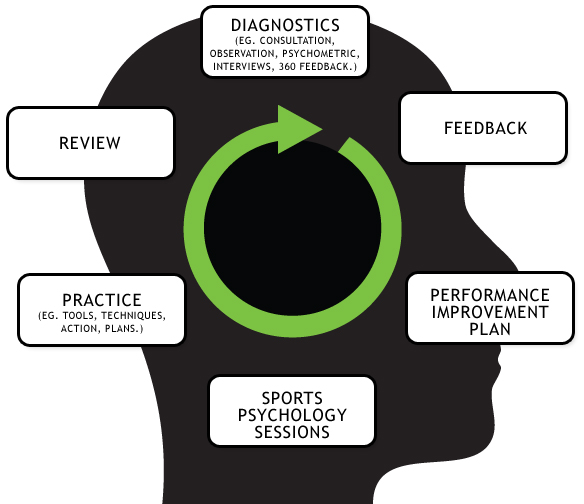
  • Sports Psychology

Sports psychologists are concerned with the psychological factors that improve athletic performance. They also look at the effects of exercise and physical activity on psychological adjustment and health. Sports psychologists typically work in academic settings and/or as consultants for sports teams.

Graduate programs in agency or community counselling train you to do counselling in human service agencies in the local community--for example, in community mental health centres. They may also train you to administer a limited number of psychological tests (vocational interest tests, for example). 
The work is similar to that done by a person with a master's or doctoral degree in clinical or counselling psychology: psychotherapy and, perhaps, limited psychological testing.

  • Educational Psychology
Educational psychologists attempt to understand the basic aspects of human learning and to develop materials and strategies for enhancing the learning process. For example, an educational psychologist might study reading and then develop a new technique for teaching reading. Educational psychologists are typically trained in departments of education (known as departments of psychology) and employed in colleges and universities.
  • School Counselling
School counsellors work with children who are troubled, helping such children function more effectively with their peers and teachers, deal with family problems, etc.. They work at the elementary, middle, and high school levels.
  • School Psychology
School psychologists do a lot of testing--mostly of children who are encountering difficulties in school--to try to diagnose the problem and, sometimes, to suggest ways of dealing with the problem. School psychologists are typically trained in departments of education (vs. departments of psychology) and work in public school systems.
  • Social Work
Another career option to consider if you're interested in counselling is social work. As is true with other disciplines, there are a variety of allied fields in social work. Social workers who practice psychotherapy are usually called either clinical social workers or psychiatric social workers.
Clinical social workers are trained to diagnose and treat psychological problems. Psychiatric social workers provide services to individuals, married couples, families, and small groups. They work in mental health centres, counselling centres, sheltered workshops, hospitals, and schools. They may also have their own private practice

Sunday, 15 February 2015

Case Study Method

Case studies are in-depth investigations of a single person, group, event or community.
Typically data are gathered from a variety of sources and by using several different methods (e.g. observations & interviews).

Strengths of Case Studies

  • Provides detailed (rich qualitative) information.
  • Provides insight for further research.
  • Permitting investigation of otherwise impractical (or unethical) situations.

Limitations of Case Studies

  • Can’t generalize the results to the wider population.
  • Researchers own subjective feeling may influence the case study (researcher bias).
  • Difficult to replicate.
  • Time consuming.

                    The psychology case study is one of the oldest research methods in the discipline. One individual, sometimes with an abnormality, is studied in great depth. Psychology, as a science, seeks to discern universal truths, so the study of atypical individuals must be done with caution. These unrepresentative studies, though, suggest avenues for future research. Some of psychology’s most rewarding findings have been influenced by initial case studies. These findings were then corroborated by representative, rigorous research methods, namely the experiment.

1. Phineas Gage

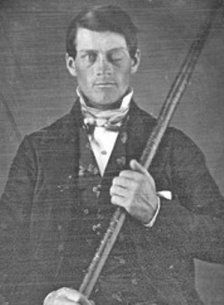
One of the few portraits of Phineas Gage, holding the same tampering iron that damaged his brain.
On a day in 1848, Phineas Gage, a mild-mannered railroad worker, used a tampering iron to pack gunpowder into a rock. But a spark accidentally detonated the gunpowder, causing the rod to shoot up through his left cheek and the top of his skull. His left frontal lobe was severely damaged, but he survived. In fact, he immediately sat up and was able to talk. But Gage’s personality dramatically changed. He became short-tempered, rude, impulsive, and immoral. Friends said he was “no longer Gage.” He lost his job as a foreman and spent some time traveling the road as a circus attraction.
Almost all of what we know about Gauge is from published accounts by Dr. John Martyn Harlow. For a case so often cited, relatively little is known about the Gage’s, namely his life before and after the accident. The extent of Gage’s personality changes may have been inaccurate. Later evidence show that Gauge, for the last decade of his life, worked the same job in two locations. This is not consistent with the image of Gage as a capricious, emotionless drifter.
Nonetheless, Gage’s early case study illustrated the significance of association areas, the areas of the cerebral cortex involved in the higher mental functions (thinking, learning, remembering, etc.) that make us truly human. It was also one of the first cases that showed a neurological basis for personality and behavior. More recent studies in psychology look into these possible connections between morality, emotion, and the brain. But they owe a debt of gratitude to Phineas Gage.

2. “Genie,” the feral child

Genie after being rescued, malnourished and unable to properly walk.
Genie is a relatively recent example of a feral child. Feral children are humans raised in social isolation, experiencing little or no human contact in their lives. Feral children are typically the result of either child abandonment or abuse. Due to malnourishment and lack of mental stimulation, feral children never fully cognitively develop.
Genie was such a child. Found in 1970 at the age of 13, Genie had spent most of her life confined in a bedroom, strapped to a potty chair. Her father had believed she was mentally retarded, so he took steps to “protect her.” He beat her every time she made a sound. Her physical and mental development was stunted, and she never learned to speak or walk properly.
After she was found and properly cared for, Genie progressed, learning to communicate nonverbally with her caretakers. But as funds and research interest dried up, she went through a series of foster homes and today, at age 54, is psychologically confined. She has regressed, reverting to her coping mechanism of silence.
Genie’s case contributed significantly to psychological and linguistic theory. It showed the significance of enculturation in acquiring social skills. From a young age, mental stimulation is needed for motor and sensory development. Without mental stimulation, neurogenesis is hindered. Feral children like Genie support the “critical period hypothesis” of language acquisition. After the first few years of life (a critical developmental period), learning a language becomes more difficult (almost impossible) for a human child. Missing this window. Genie never learned to speak a grammatically correct verbal language.

3. H.M.
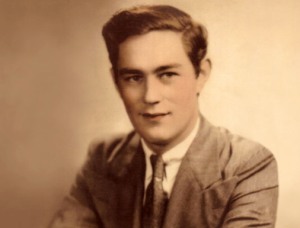
A portrait of H.M., Henry Molaison, in 1953.
Henry Gustav Molaison was perhaps the most important patient in the history of neuroscience. At the age of 9, a bicycle accident damaged his brain and caused him to suffer from seizures. In 1953, as a last resort for curing these convulsions, surgeons removed slivers of tissue from his hippocampus, an area we know now (thanks to HM) is critical in the formation of long-term memories. H.M. was left with severe anterograde amnesia. He basically lived in the past, unable to create new memories. Even his past memories were clouded by mild retrograde amnesia, leaving him only able to remember the gists of childhood events.
Dr. Brenda Milner’s study of H.M. paved the way for the study of human memory and memory disorders. In repeated trials, Dr. Milner told H.M. to perform a simple motor task, such as outlining a five-point star. Each time, H.M. recognized it as an entirely new experience. Yet he became more proficient at the task with practice. H.M. could be classically conditioned, learning things without the awareness of having learned them.
Thanks to Dr. Milner’s study, we know that memory consists of two systems that operate together. One is explicit, or declarative. It involves facts we know and can declare. It of course depends on the hippocampus, which H.M. had partially removed. The other is retention that is independent of conscious recollection: subconscious learning of motor functions. This finding revolutionized the understanding of memory and the neurological mechanisms behind it.

4. Jill Price

Jill Price, who published her story in a 2008 memoir.
Jill Price is one of the very few patients with hyperthymesia, an incredible memory that allows her to remember numerous obscure aspects of her life in incredible detail. She can, for example, remember what she had for dinner 20 years ago, on an ordinary August afternoon. This ability has caused her significant emotional trauma due to her remembrance of every derogatory remark or traumatic event in her life. Jill Price is still participating in psychological studies that hope to shed light on her condition.
Recent memory tests , however, show that Jill Price isn’t exactly a memory whiz, and that her abilities have been blown out of proportion. Mrs. Price cannot memorize a new list of words with great accuracy. Her memory is, in many respects, average. She can remember famous dates and names, but only if she finds them somehow relevant to herself. One of the key, previously underestimated, elements of Mrs. Price’s condition is her OCD-like symptoms. She hoards and feels a need to organize her life. Perhaps most significantly, she spends much of her time constantly thinking about herself and events in her life, elaborately encoding them into her memory.
All of this evidence, along with brain scans that show enlarged regions consistent with an OCD patient, suggests that Jill Price has a rare offshoot of Obsessive-compulsive disorder, and that her memories are a result of obsession. Only future research can corroborate or disprove this promising theory.

5. The John/John Case

David Reimer, formerly Brenda Reimer.
Dr. John Money was an influential sexologist that pioneered the theory of gender neutrality. He argued that, in the classic nature vs. nurture debate, nurture fully determined gender. Gender was supposedly malleable and determined in the first few years of cognitive development. Once the “gender gate” closed, a human’s gender identity was relatively stable.
The Reimer twins were circumcised at 6 months old. Unfortunately, the electrical equipment used in the circumcision malfunctioned, severely damaging Bruce Reimer’s penis. A few months later, his parents wrote to Dr. Money seeking help. Under his advice, Bruce Reimer was sexually reassigned in 1967. He was castrated and a vulva was surgically created. His parents attempted to raise him as a girl, Brenda.
In infrequent annual follow-ups, Brenda’s parents lied about the surgery’s success. Dr. Money then used this case study as proof of his controversial gender theory. The case revolutionized the way psychologists viewed gender, which apparently had no biological basis.
Growing up, Brenda acted masculine and was teased constantly at school. She could not socialize as a girl. Contrary to Dr. Money’s reports, she did not identify as female. At age 13, Brenda’s parents told her about her past. Brenda, relieved, then fully identified as a male, taking the name “David.” She underwent gender reassignment surgery and lived the rest of her life as a male.
Dr. Money failed to follow up with his patient because doing so would have shattered his influential theory. But David Reimer finally went public in 1997, telling his story with the aid of Dr. Milton Diamond, a noted rival of Dr. Money. David Reimer, who had suffered from depression throughout his life, committed suicide seven years later.
This landmark case study was frequently cited by the feminist movement, anthropologists, developmental psychologists and biologists, and psychiatrists to argue that nurture, not nature, explained all gender differences. Dr. Money’s theory became widely accepted. Intersex children, in accordance to this study’s findings, were regularly sexually reassigned.
The impact of this controversy is still being felt. The one case study that backed Dr. Money’s theory perfectly was unscientific, misleading, and unethical. Dr. Money’s legacy is posthumously harmed, and his theory is once again with valid proof.

Proceeding With Scientific Caution and Skepticism

As we’ve seen, case studies can be incredibly informative, despite dealing with a few atypical individuals. But the use of case studies in psychology must be done both carefully and ethically.
The John/Joan case was discussed last because it basically shows us everything the full range of a case study’s effects, both positive and negative. Case studies can provide opportunities for experimentation that cannot be artificially created. Two twin boys — one “normal” male and one to be raised as a female — gave Dr. Money a chance to put his theory to the test.
When a case study is correct, it can be used as definitive proof of one theory or disproof of another. But the above case study shows us that, when flawed, these studies can lead to misleading, incomplete, or downright false information. Not only are they not representative, the scientists studying them can be biased. Dr. Money fell in love with his own theory and refused to see any contrary evidence as reliable. A psychologist must be explicit about one’s biases when performing a case study, and avoid becoming too emotionally invested in a particular viewpoint.
Tuesday, 10 February 2015

Life Span Development


Developmental psychology is the study of how people grow and change. These changes traditionally looked at how people's thoughts, feelings, behaviours and physical bodies changed and grew in childhood and adolescence.


Life span development is the study of how humans grow and change throughout their entire life. The term lifespan development refers to age-related changes that occur from birth, throughout a persons' life, into and during old age.

The 6 Stages of lifespan development are :


          Infancy

Birth-two years. While the infant is dependent on adults for most things, many psychological characteristics are rapidly developing. During this stage, the bond that develops between the infant and their primary caregiver is important in terms of the infant's later emotional development.


        Childhood

Two-ten years. During this stage, children become increasingly independent from their parents as they learn to do things themselves and gain more self-control. During this stage, children's cognitive skills develop and they also begin to develop an understanding of what is right and wrong.


         Adolescence

Ten-twenty years. The onset of puberty marks the beginning of adolescence. It is dominated by seeking independence from parents and developing one's own identity. Compared to the child, an adolescent's thought processes are more logical, complex and idealistic.


        Early Adulthood

Twenty-forty years. This is the stage of establishing personal and financial independence and establishing and consolidating a career. For many, it is also the time in which individuals select a partner, develop an ongoing intimate relationship and begin a family.


         Middle Age

Forty-sixty five years. This is a period of expanding social and personal involvements and responsibilities, advancing a career, and supporting offspring in their development to becoming mature individuals.


           Older Age

Sixty five years plus. A period of considerable adjustment to changes in one's life and self-perceptions. For many older people, this is a very liberating time when they no longer have the day-to-day responsibility of looking after their children or working.


Monday, 9 February 2015

Measurement of Attitudes

Attitude : 


                         A Predisposition or a tendency to respond positively or negatively towards a certain idea, object, person or Situation.

An attitude can be as a positive or negative evaluation of people, objects, events, activities, and ideas.

Structure of Attitudes

          Attitudes structure can be described in terms of three components.
  • Affective component: Feelings / emotions that something evokes. e.g. fear, sympathy, hate.
  • Behavioral (conative) component: the way the attitude we have influences how we act or behave. 
  • Cognitive component: Thoughts, beliefs, and ideas about something. 
This model is known as the ABC model of attitudes.

How Do Attitudes Form?

                Attitudes form directly as a result of experience. They may emerge due to direct personal experience, or they may result from observation. Social roles and social norms can have a strong influence on attitudes. Social roles relate to how people are expected to behave in a particular role or context. Social norms involve society's rules for what behaviors are considered appropriate.
Follow the link for Measurement of Attitudes 
https://drive.google.com/file/d/0B23rsCPpomoUUURfVDhyWWpPeUE/view?usp=sharing

Basics & General Psychology

What is Psychology?


Psychology is the scientific study of mind and behaviour.

 :  the mental or behavioural characteristics of an individual or group
      :  the study of mind and behaviour in relation to a particular field of knowledge or activity


To Know more about History - Goals -  Different Aspects - Career- Ethics of Psychology. Follow the link given below - 

Psychology Syllabus

                     Hey Friends before getting into Psychology. Just have an overview about the Subjects and Topics will be covered in MSc. Psychology.


Here is the link to view Psychology Syllabus :